
Introduction
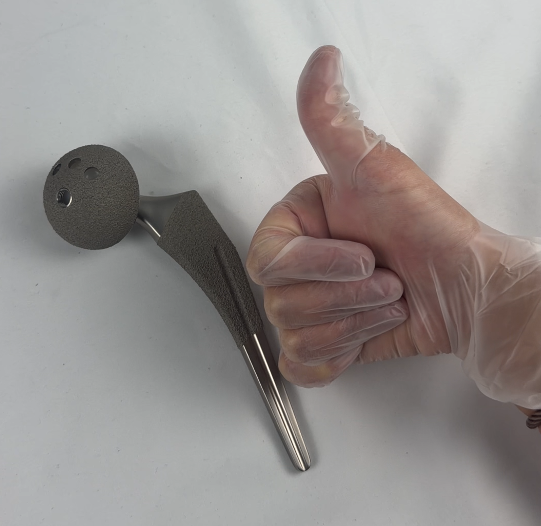
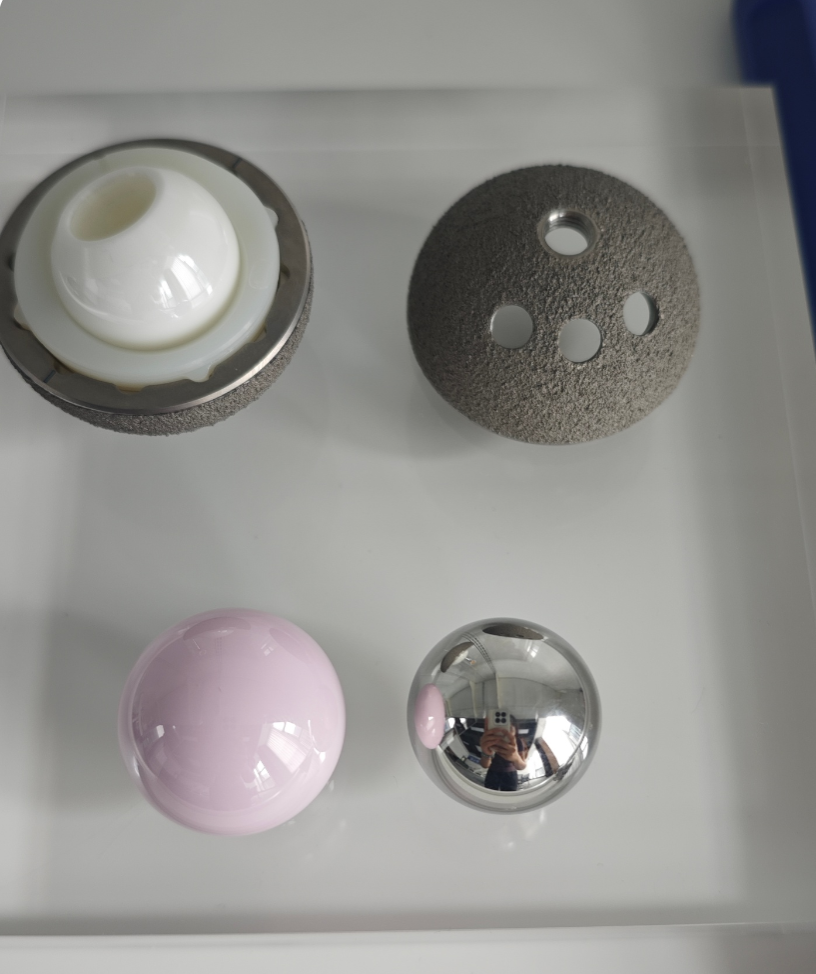
Total hip arthroplasty succeeds or fails largely on its bearing surface. Wear particles from the bearing can trigger osteolysis, leading to implant loosening over time. Modern implants solve this problem with advanced materials. The ceramic femoral head offers hardness and smoothness unmatched by metal. The XLPE acetabular hip liner – highly cross-linked polyethylene – resists wear far better than conventional polyethylene. The bipolar head system hip replacement components provide a dual-bearing design for specific cases like femoral neck fractures. This article reviews the clinical evidence for each option.
Why Ceramic Femoral Heads Outperform Metal
Lower Wear Rates
Fourth-generation ceramic heads significantly outperform cobalt-chromium. A meta-analysis found mean wear rates of 0.047 mm/year for ceramic versus 0.063 mm/year for metal on XLPE liners. For 36 mm heads, ceramic showed even better wear performance.
Excellent Results in Young Patients
A 10-year study of patients aged 50 or younger with ceramic 32 mm heads on XLPE reported 97.1% survivorship at 5 and 10 years, and 95.4% at 15 years. No wear-related revisions occurred. Mean linear wear was only 0.0184 mm/year. Patient satisfaction reached 86% for “extremely satisfied” or “very satisfied.”
Benefits in Hemiarthroplasty
A Taiwanese study of over 47,000 hemiarthroplasty patients compared ceramic to metal heads. The ceramic group had significantly lower postoperative and medical complication risks within 90 days, though revision rates were similar at 3.12 years.
The Evolution of XLPE Acetabular Liners
Third-Generation XLPE Performance
A 10-year analysis of 133 hips using third-generation XLPE liners found mean linear wear of only 0.0172 mm/year and volumetric wear of 16.99 mm³/year. No osteolysis or mechanical failures occurred. Acetabular component survival was 100%.
Risk Factors for Accelerated Wear
Younger age and use of offset (+4 mm) liners predicted faster wear. Younger patients place higher demands on bearings. Offset liners change hip biomechanics, increasing contact stresses. Surgeons may consider alternative bearings or closer follow-up for these patients.
Ceramic-on-XLPE – The Preferred Combination
Registry data shows ceramic heads on XLPE liners are now the most common bearing couple worldwide. One large registry found no difference in revision risk between metal and ceramic heads on XLPE. However, head size mattered. Smaller heads (<32 mm) carried higher revision risk than 36 mm heads for both materials.
Bipolar Head Systems – A Specialized Option
How Bipolar Systems Work
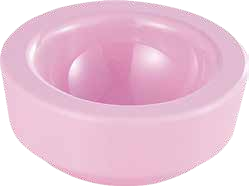
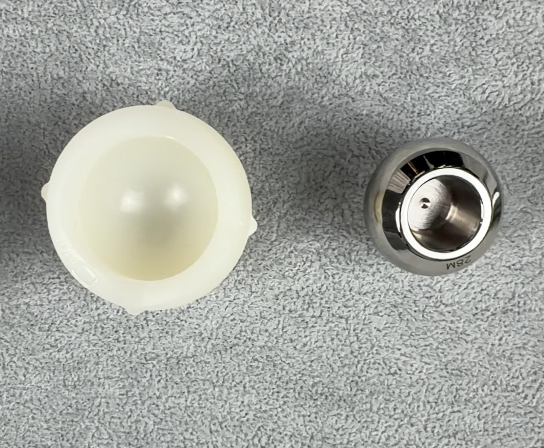
A bipolar head system has an inner bearing that articulates with the femoral stem and an outer bearing that articulates with the acetabulum. The dual-bearing design theoretically reduces wear on native acetabular cartilage in hemiarthroplasty patients.
Indications for Bipolar Hemiarthroplasty
Bipolar systems are used mainly for femoral neck fractures in elderly patients requiring hemiarthroplasty. The bipolar head moves against the patient's natural acetabular cartilage. By allowing motion at two interfaces, bipolar designs may reduce acetabular erosion compared to unipolar designs.
Dual Mobility Versus Bipolar
Do not confuse bipolar hemiarthroplasty systems with dual mobility cups used in total hip arthroplasty. A 2024 study comparing dual mobility constructs to standard unipolar heads on XLPE found dual mobility had the lowest re-revision and dislocation risks in revision total hip arthroplasty. The hazard ratio for dislocation was 2.46 for standard XLPE compared to dual mobility.

Matching the Bearing to the Patient
Young, Active Patients
For patients under 50 with high activity demands, ceramic-on-XLPE is supported by strong evidence. Survivorship exceeds 95% at 15 years, and wear rates are extremely low.
Elderly Patients with Femoral Neck Fractures
For elderly patients with displaced femoral neck fractures requiring hemiarthroplasty, both ceramic and metal heads on XLPE produce good results. Ceramic heads may offer lower complication rates, but revision rates are similar. Bipolar systems remain an option.
Revision Surgery
For revision total hip arthroplasty where instability is a concern, dual mobility constructs have shown the best results. A 2024 study found dual mobility had significantly lower re-revision risk compared to standard XLPE (HR 2.03) and constrained liners (HR 2.43).
Conclusion
The bearing surface directly determines hip arthroplasty longevity. The ceramic femoral head paired with an XLPE acetabular hip liner offers extremely low wear, excellent survivorship beyond 15 years, and high patient satisfaction. For hemiarthroplasty patients, bipolar head system hip replacement components provide a specialized option. Matching the bearing to patient age, activity, and condition leads to the best outcomes.