

Content:
Introduction
Falling and breaking a hip changes everything for an older person. The pain, the loss of mobility, the risk of complications – all of it demands a thoughtful surgical answer. Two main paths exist: internal fixation or joint replacement. The dynamic hip screw has held a place in fracture care for decades. Arthroplasty – replacing the joint entirely – has gained ground for certain fracture types. Overarching both is the concept of osteosynthesis, the biological approach to fracture healing. This article sorts out the evidence and helps clarify the decision.
The Dynamic Hip Screw – Still Useful for Stable Fractures
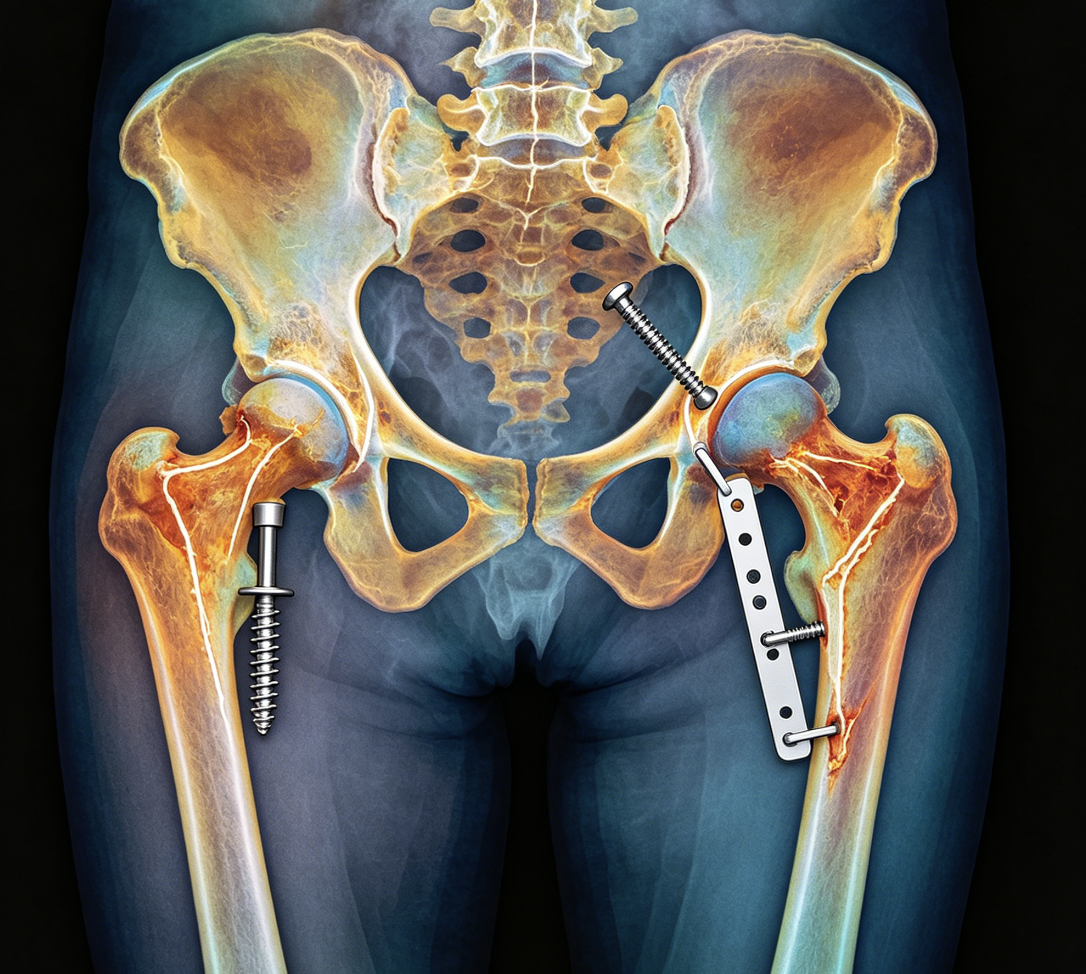
The dynamic hip screw combines a large lag screw with a side plate. The lag screw goes up into the femoral head. The side plate attaches to the femoral shaft with cortical screws. The screw sits loosely inside a barrel, allowing it to slide as the patient bears weight.
Where the DHS Works Best
Stable intertrochanteric fractures – AO/OTA type 31-A1 – respond very well to a DHS. Union rates exceed 90 percent in most series. The procedure is straightforward, the implants are widely available, and the cost is reasonable. For elderly patients with good bone quality and a stable fracture pattern, the DHS remains a solid choice.
When the DHS Falls Short
Unstable patterns – reverse oblique, comminuted, or involving the subtrochanteric region – do poorly with a DHS. The sliding mechanism cannot control rotation, and the longer lever arm increases the risk of hardware failure. For these cases, an intramedullary device like a proximal femoral nail works better.
Arthroplasty – A Better Answer for Displaced Femoral Neck Fractures
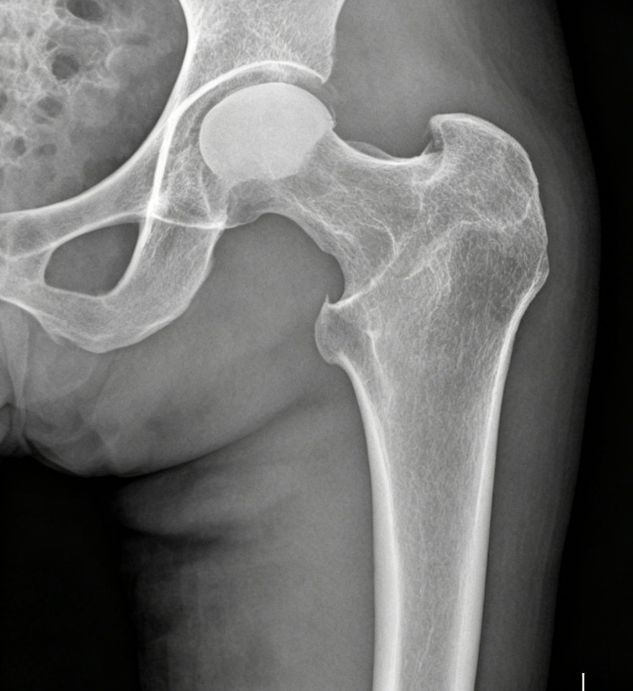
A displaced femoral neck fracture cuts off blood supply to the femoral head. Fixing the bone does not fix that problem. The head can die – a condition called osteonecrosis – leading to collapse, pain, and eventual need for revision surgery.
Why Arthroplasty Wins in This Situation
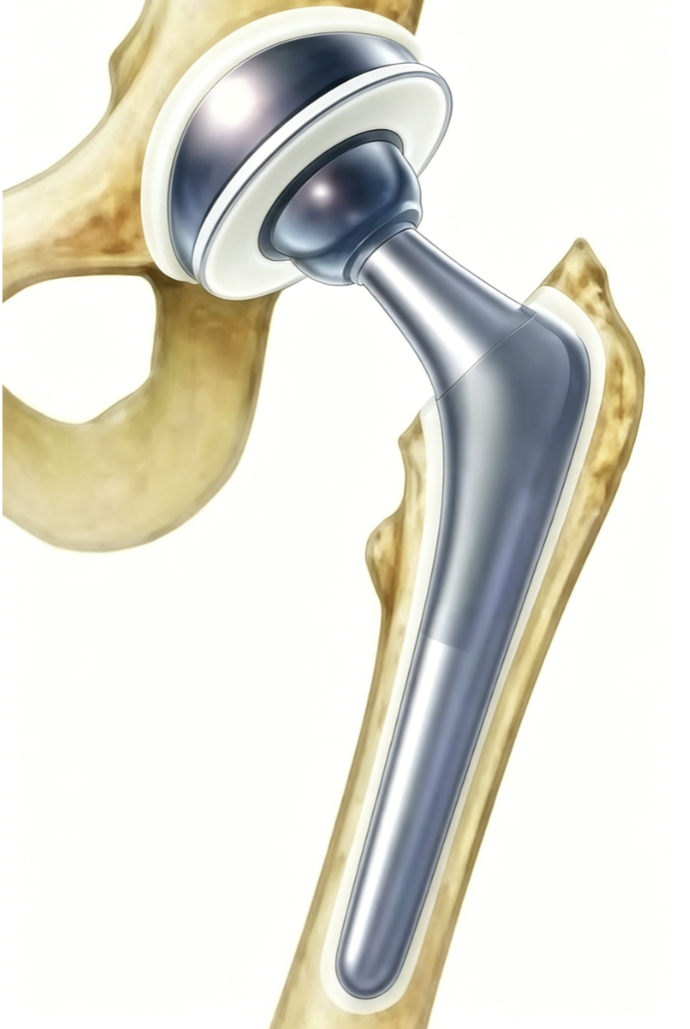
Hemiarthroplasty replaces just the femoral head. Total hip arthroplasty replaces both the head and the socket. For patients over 70 with a displaced femoral neck fracture (Garden III or IV), arthroplasty offers a one-time solution. No risk of nonunion. No risk of osteonecrosis. Immediate weight-bearing is allowed, which gets patients walking sooner.
Cemented or Cementless?
Cemented stems provide immediate stability in osteoporotic bone – a clear advantage for frail elderly patients. Cementless stems rely on bone ingrowth and need better bone quality, making them more suitable for younger, active patients. The choice also depends on surgeon experience and local practice patterns.

Osteosynthesis – The Biological Principles That Guide All Fracture Care
Osteosynthesis simply means surgically fixing a broken bone with implants. But the word carries deeper meaning. Modern osteosynthesis is not just about hardware – it is about biology.
The Shift From Rigid to Biological Fixation
Older teaching said fractures needed rigid compression to heal. Surgeons stripped soft tissues, exposed the bone widely, and squeezed fragments tight. But that approach killed blood supply. Today, surgeons know that preserving blood flow matters more. Minimally invasive techniques, indirect reduction, and bridging plates that act as internal splints – all of these fall under the umbrella of biological osteosynthesis.
How This Applies to Hip Fractures
For intertrochanteric fractures, a sliding hip screw respects biology by allowing some motion. For femoral neck fractures, arthroplasty accepts that the bone cannot heal and replaces the joint instead. Both decisions reflect the same principle: match the treatment to the biology of the injury, not just to the fracture on the X-ray.
Conclusion
Picking the right treatment for a hip fracture comes down to fracture pattern, bone quality, and patient age. Stable intertrochanteric fractures in older patients with reasonable bone do well with a dynamic hip screw. Unstable patterns need an intramedullary device. Displaced femoral neck fractures in patients over 70 call for arthroplasty. Underlying all of these choices is the principle of osteosynthesis: treat the patient, not just the X-ray, and let biology guide the way.
