
Introduction
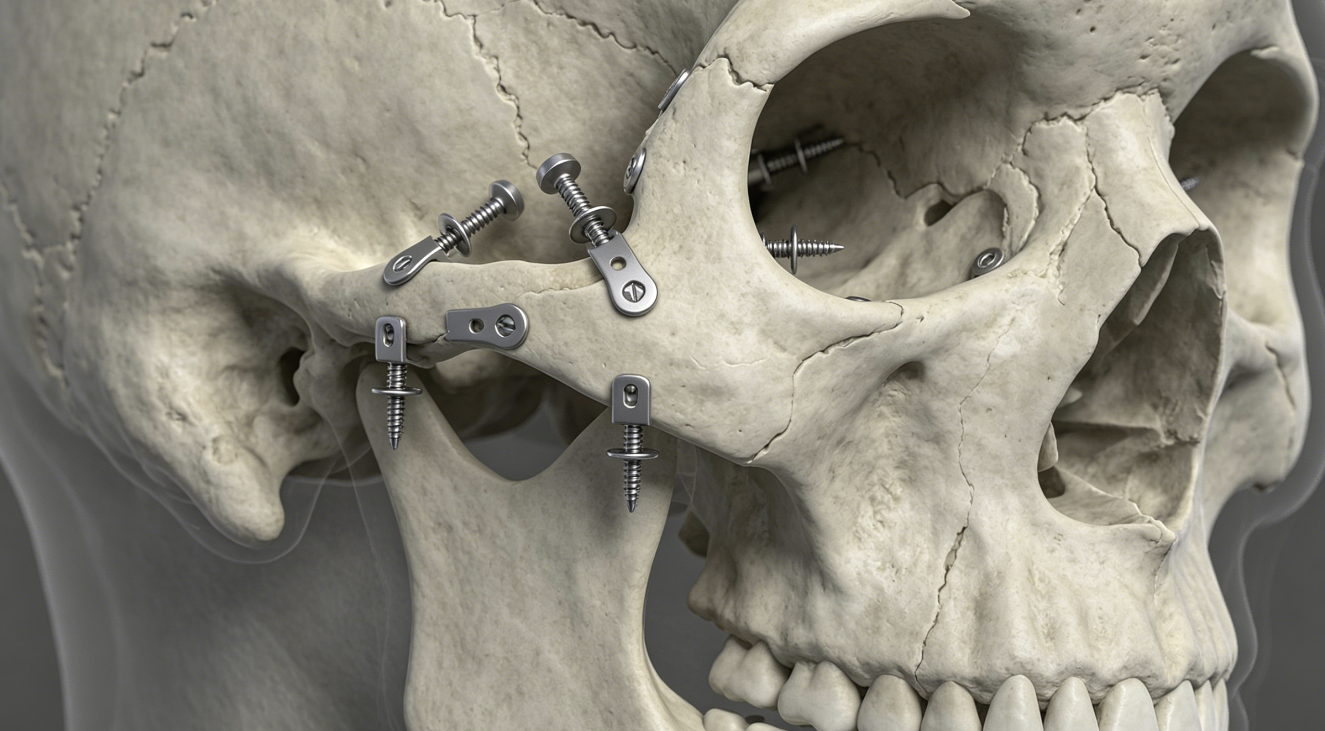
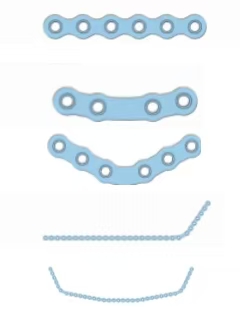
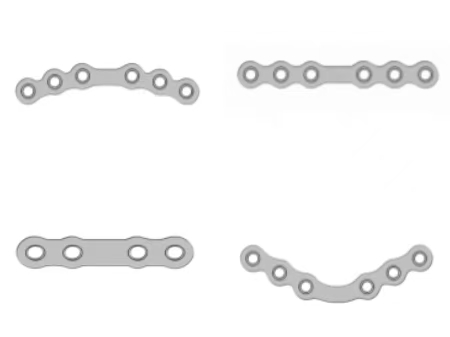
Facial fractures are different from fractures elsewhere in the body. The bones of the face are thin, irregularly shaped, and closely tied to appearance and function. A poorly treated cheekbone or eye socket fracture can leave a patient with visible asymmetry, double vision, or trouble chewing. That is why surgeons need implants designed specifically for this delicate anatomy. The 1.5/2.0/2.4mm craniofacial plate offers low-profile fixation that sits beneath the skin without causing visible bumps. The facial trauma fixation plate comes in various shapes to match orbital rims, zygomatic arches, and nasal bones. And the self-tapping screw simplifies surgery by cutting its own path into the bone, saving time and reducing heat damage. This article walks through how these three components work together in facial fracture repair.
What Are 1.5/2.0/2.4mm Craniofacial Plates and Why Do Thicknesses Matter?
The facial skeleton varies in bone thickness from one area to another. The forehead and jaw are relatively thick and can hold larger screws. The orbital floor, nasal bones, and midface are paper-thin in places – sometimes less than 1 mm thick. Using a standard 2.4 mm trauma plate on the orbital rim would be like trying to fix a watch with a hammer.
Matching Plate Thickness to Anatomical Location
The 1.5 mm plates are the thinnest option. Surgeons use them for the orbital floor, medial orbital wall, and nasal bones. These plates bend easily and barely show through the skin. The 2.0 mm plates are the workhorse for midface fractures – the zygoma, maxilla, and frontal bone. They offer more strength but still sit low enough to avoid palpability. The 2.4 mm plates are reserved for load-bearing areas like the mandible, where chewing forces demand stronger hardware.
AO Foundation documentation confirms that plate thicknesses of 1.0, 1.25, and 1.5 mm work well for neuro and midface procedures, while 2.0 mm and thicker plates handle trauma cases involving the lower jaw. The OsteoMed ICON system similarly offers modular 1.2, 1.6, 2.0, and 2.4 mm modules, allowing surgeons to customize their approach based on fracture location and patient age.
Material and Design Features
Most craniofacial plates today are made from commercially pure titanium or titanium alloy. Titanium has several advantages. It is strong but light. It does not cause allergic reactions in most patients. And it integrates well with bone over time. Modern plates also feature rounded edges and low profiles to reduce soft tissue irritation. Some systems incorporate locking technology, where the screw head threads into the plate itself – a useful feature when bone quality is poor.
How Do Facial Trauma Fixation Plates Address Different Fracture Patterns?
Facial fractures rarely come as simple straight lines. The bones of the face have curves, angles, and buttresses that must be restored precisely. A generic straight plate will not fit the infraorbital rim or the zygomaticomaxillary buttress.
Plate Shapes for Specific Anatomical Sites
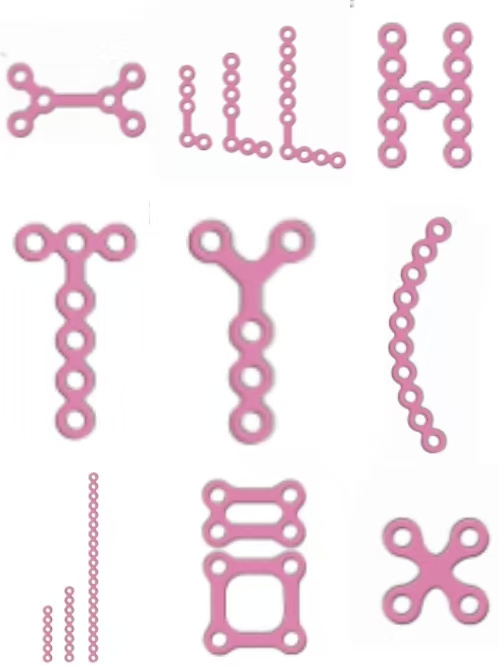
Manufacturers produce dozens of plate shapes for facial trauma. Y-shaped plates and X-shaped plates work well for comminuted zygomatic fractures. Orbital rim plates have a gentle curve that matches the lower edge of the eye socket. L-shaped plates support the frontozygomatic suture. Mesh plates cover larger defects in the orbital floor or anterior maxillary wall.
The Matrix Mandible system from AO Foundation illustrates this principle well. Their plates come with conical locking technology and rounded profiles. Thinner plates (1.0 to 1.5 mm) use a silver color code for easy identification, while thicker trauma plates (2.0 mm) use light blue. This color-coding helps operating room staff quickly select the right implant.
Evidence for Plating Technique Choices
A 2025 network meta-analysis compared different plating techniques for mandible fractures. The study looked at 676 patients treated with either one mini-plate, two mini-plates, reconstruction plates, or 3D plates. The results showed that 3D mini-plates had the lowest complication rate at 8 percent, compared to 36 percent for single mini-plates. This suggests that plate design and configuration matter a great deal for outcomes.
For thin facial bones like the maxillary sinus wall, researchers have measured how much torque these bones can handle before screw threads strip. Drommer's work on self-tapping screws found that most midface and nasal bones have sufficient strength for plate anchorage – the only weak spot was the central maxillary sinus wall.
What Makes Self-Tapping Screws Different From Standard Screws?
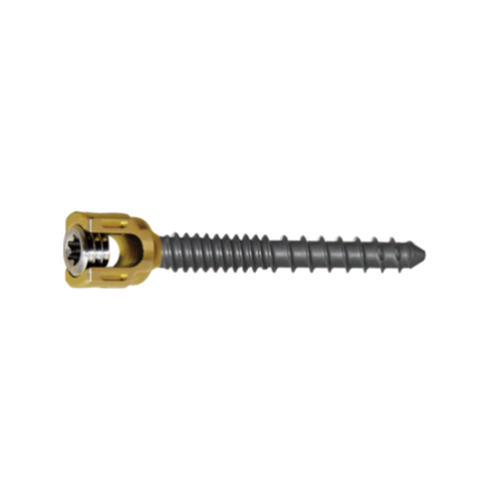
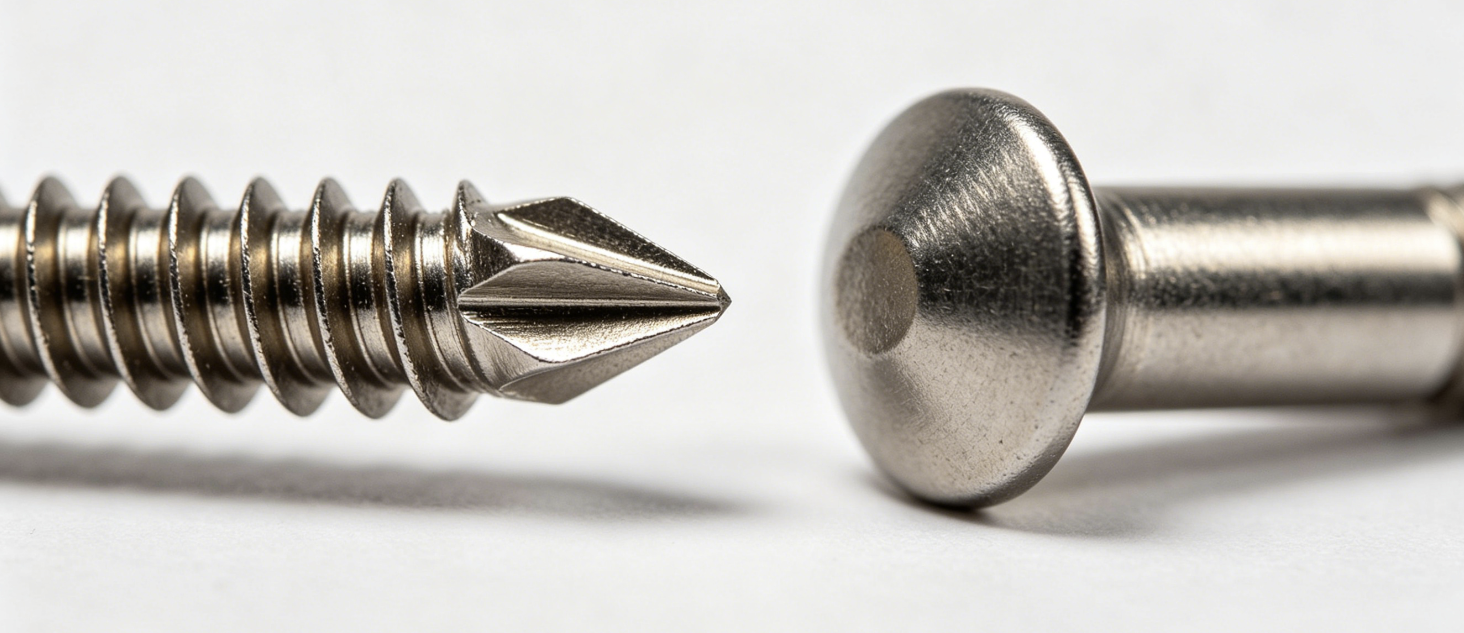
A standard bone screw needs a pilot hole drilled first, then the hole must be tapped – cut with threads – before the screw goes in. That is two extra steps. A self-tapping screw eliminates the tapping step. The screw has flutes near the tip that cut threads as it turns into the pre-drilled pilot hole.
Biomechanical Performance of Self-Tapping Screws
A classic study by Saka in the British Journal of Oral and Maxillofacial Surgery compared five different self-tapping screw systems. The research tested screws on polyvinylchloride plates, human skull bone, and mandibular bone from cadavers. For 2.0 mm diameter screws, the Champy system produced the highest compressive force at 153.4 Newtons. The Centre-Drive screw showed the best pullout strength at 619.5 Newtons – well within the range of human bite force (216 to 740 Newtons).
The study concluded that for monocortical osteosynthesis in the craniofacial region, screws longer than 7 mm or wider than 2 mm in diameter offer no real advantage. This finding has practical value. Using shorter, narrower screws reduces the risk of damaging teeth roots or penetrating into the sinus.
Self-Drilling Versus Self-Tapping – A Distinction
Some modern screws go one step further. Self-drilling screws combine drilling and tapping into one step, removing the need for a separate pilot hole. A 1998 review by Kellman and Tatum noted that self-drilling screws make application faster and easier, though the technology was still relatively new at that time. Today, both self-tapping and self-drilling screws are widely available. The choice often comes down to bone density. In very hard bone, pre-drilling and self-tapping may be safer. In soft bone, self-drilling screws work fine.
Putting It All Together – A Clinical Example
Consider a patient with a zygomaticomaxillary complex fracture – what many call a "tripod" fracture. The cheekbone has broken away from its attachments at the frontozygomatic suture, the infraorbital rim, and the zygomaticomaxillary buttress.
The surgeon approaches the frontozygomatic suture through an upper blepharoplasty incision. A 2.0 mm L-shaped plate is contoured to fit the bone. The surgeon drills pilot holes with a 1.5 mm drill bit. Three self-tapping screws, each 5 mm long, are inserted to lock the plate in place. The infraorbital rim is approached through a subciliary incision. A curved orbital rim plate – 0.7 mm thick – is applied with four self-tapping screws. Finally, the zygomaticomaxillary buttress is accessed through an upper buccal sulcus incision. A straight 2.0 mm plate bridges the fracture with two screws on each side.
The entire construct restores the cheek projection, supports the orbital floor, and aligns the bite. The patient goes home after one night in the hospital. Six weeks later, the fractures are healing well. The plates are barely palpable beneath the skin.
Conclusion
Treating facial fractures demands implants that match the unique anatomy of the craniofacial skeleton. The 1.5/2.0/2.4mm craniofacial plate gives surgeons thickness options for different bone densities. The facial trauma fixation plate comes in shapes designed for specific anatomical sites. And the self-tapping screw simplifies placement while providing reliable hold. Together, these three components allow surgeons to restore both function and appearance after facial injuries.