

Introduction
More than one million people undergo total hip replacement each year worldwide. The procedure restores mobility, eliminates pain, and improves quality of life. But the success of any hip replacement depends heavily on one factor: the implant itself. Among all options available today, the ceramic hip prosthesis has emerged as the preferred solution for an increasing number of surgeons and patients. What makes the hip prosthesis so critical to surgical outcomes? Why does hip ball replacement with ceramic materials offer better longevity than metal alternatives? And how has the ceramic hip prosthesis evolved to become the gold standard in modern orthopedics? Let us explore the answers.
Understanding the Hip Prosthesis and Its Components
What Is a Hip Prosthesis?
A hip prosthesis is an artificial implant designed to replace a damaged or diseased hip joint. The most common reason for hip replacement is osteoarthritis, which wears away the cartilage that cushions the joint. Other causes include rheumatoid arthritis, osteonecrosis, hip fractures, and developmental abnormalities. When conservative treatments fail to provide relief, a total hip prosthesis becomes the most effective solution.
The Basic Parts of a Hip Prosthesis
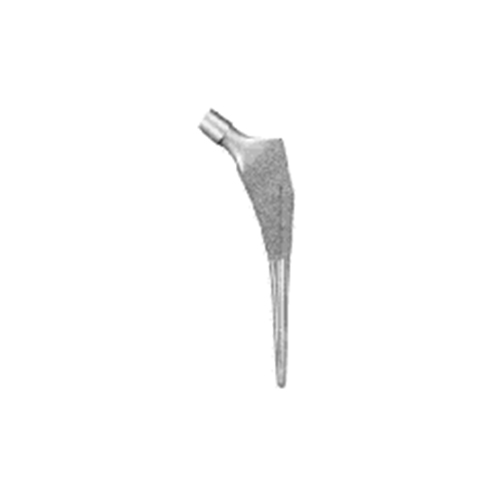
Every hip prosthesis consists of four main components working together. The femoral stem fits into the hollow center of the thigh bone, providing stability and anchoring the implant. The hip ball replacement component, also called the femoral head, attaches to the top of the stem and serves as the “ball” of the ball-and-socket joint. The acetabular shell goes into the pelvis, acting as the socket. The liner sits inside the shell, creating the smooth bearing surface against which the ball moves. The materials chosen for each part directly affect how long the hip prosthesis lasts and how well it functions.
Why Material Selection Matters
The hip prosthesis faces an incredibly demanding environment. Each year, an active patient takes roughly one million steps. With every step, the bearing surfaces experience friction and wear. Over time, wear particles can trigger an immune response, leading to bone loss and implant loosening. That is why the choice of materials for hip ball replacement and the liner is arguably the most important decision in hip replacement surgery.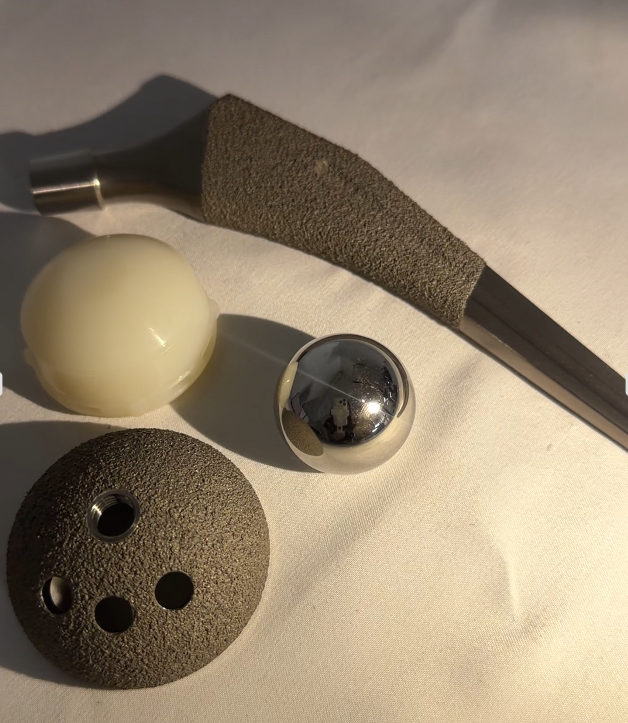
The Rise of the Ceramic Hip Prosthesis
A Brief History of Bearing Surfaces
Early hip replacements used metal-on-metal or metal-on-polyethylene bearings. While these designs worked reasonably well, they had significant limitations. Metal-on-metal bearings released metal ions into the body, causing adverse reactions in some patients. Metal-on-polyethylene bearings generated polyethylene wear particles, which led to osteolysis and premature implant failure. These challenges drove researchers to search for better alternatives. The ceramic hip prosthesis emerged from that search as the most promising solution.
The Fourth Generation Leap
Modern ceramic hip prosthesis technology has advanced significantly from its early days. Fourth-generation ceramics, such as alumina matrix composites reinforced with zirconia, offer dramatically improved mechanical properties. These materials combine the hardness and wear resistance of traditional ceramics with enhanced fracture toughness. As one 2025 review noted, last generation ceramics, both pure alumina and alumina matrix composite, have improved strength and versatility, and most surgeons now use ceramic heads worldwide as the first option in total hip replacement.
Why Ceramic Hip Ball Replacement Outperforms Metal
The hip ball replacement component made of ceramic offers several distinct advantages over metal alternatives. Ceramic is exceptionally hard and smooth, which means it generates far less friction when rubbing against the liner. Lower friction translates directly to less wear. Less wear means fewer wear particles. Fewer particles mean a lower risk of osteolysis and implant loosening. The ceramic hip prosthesis also exhibits excellent biocompatibility, meaning the body tolerates the material well without adverse immune reactions.
Clinical Evidence Supporting Ceramic Hip Prosthesis
Registry Data Tells a Compelling Story
The American Joint Replacement Registry provides some of the most reliable data on real-world implant performance. According to the AJRR Annual Report 2025, ceramic femoral heads have risen dramatically in use, reaching 82.5% of all primary total hip arthroplasties. This represents more than double the rate reported in 2012, which stood at just 38.1%. Over the same period, cobalt-chromium heads declined from 55.8% to a mere 6.8%. These numbers reflect a clear shift in surgeon preference toward the ceramic hip prosthesis.
What the Research Says About Young Patients
Young, active patients present a particular challenge for hip replacement surgeons. These patients place higher demands on their implants and expect them to last for decades. A 2025 study published in The Journal of Arthroplasty analyzed data from over 101,000 primary total hip arthroplasty cases in patients aged 18 to 54 years. The researchers compared revision rates across six different bearing types, including ceramic-on-ceramic, ceramic-on-polyethylene, and metal-on-polyethylene. The results were striking. Ceramic or ceramicized metal on a polyethylene bearing outperformed traditional metal-on-polyethylene bearings, leading the authors to conclude that this combination should be considered the gold standard in younger patients. The study found that all-cause revision rates with modern bearings remained low, with survivorship exceeding 96%. This evidence strongly supports the use of ceramic hip prosthesis technology in the most demanding patient population.
Long-Term Survivorship Data
How long does a ceramic hip prosthesis actually last? A 2025 study with a minimum 15-year follow-up provides some answers. Researchers followed 533 hips in 417 patients who received alumina-on-alumina ceramic bearings. The 20-year implant survivorship reached 85.2% when considering reoperation for any cause, and 94.4% when limited specifically to ceramic fracture. Most fractures that did occur happened after 10.9 years postoperatively, suggesting that the vast majority of patients enjoy more than a decade of trouble-free function from their ceramic hip prosthesis.
Hip Ball Replacement Options for Different Patients
Ceramic-on-Polyethylene
The hip ball replacement component works in conjunction with a liner. One of the most popular combinations today is ceramic-on-polyethylene. In this design, a ceramic hip prosthesis ball articulates against a highly cross-linked polyethylene liner. The AJRR 2025 report shows that ceramic-on-polyethylene bearings increased to 73.5% of all primary total hip arthroplasties, making them the most common bearing couple in use. This combination offers an excellent balance of wear resistance and cost-effectiveness. Dr. Nathan Cafferky notes that ceramic-on-polyethylene implants are well-suited for younger, more active patients seeking longevity and reduced wear.
Ceramic-on-Ceramic
For patients who demand the absolute highest wear resistance, ceramic-on-ceramic bearings represent the ultimate option. In this design, both the hip ball replacement and the liner are made of advanced ceramic materials. The wear rate of ceramic-on-ceramic is the lowest of any bearing couple currently available. A 2025 midterm study of Delta ceramic liners with titanium locking bands followed 514 hips for an average of 9.5 years. The results showed no cases of liner or head fracture, no loosening, and no wear-related osteolysis. The 10-year cup survival rate reached 97.8%. These outstanding results explain why ceramic-on-ceramic remains the first choice for many surgeons treating young, high-demand patients.
Metal Sensitivity Considerations
Some patients cannot tolerate metal implants due to known metal allergies or sensitivities. For these individuals, the ceramic hip prosthesis offers a clear advantage. Ceramic materials are biologically inert and do not release metal ions into the body. The Royal Orthopaedic Hospital in Birmingham recently introduced ceramic-on-ceramic hip resurfacing specifically noting that ceramic implants are well-tolerated by the body and represent a suitable option for patients where metal implants are not recommended, such as women and patients with smaller frames.
Addressing Concerns About Ceramic Hip Prosthesis
Ceramic Fracture Risk
One concern that sometimes arises with ceramic hip prosthesis technology is the risk of ceramic fracture. Early generations of ceramics had higher fracture rates, which understandably worried surgeons and patients. However, modern fourth-generation ceramics have dramatically reduced this risk. Manufacturer data shows fracture rates as low as 0.002% for Delta heads. While the risk is not zero, it has become extremely low with contemporary materials. The 15-year follow-up study mentioned earlier found that even with third-generation ceramics, most fractures occurred after more than a decade of use, and survivorship limited to ceramic fracture remained high at 94.4% at 20 years.
Joint Noise or Squeaking
Another potential issue with ceramic hip prosthesis implants is audible joint noise, sometimes described as squeaking or clicking. A study of fourth-generation ceramic-on-ceramic revisions followed 63 patients for over 11 years and found that 32% reported some noise, with half of those describing squeaking. Importantly, the noise did not affect patient satisfaction or daily living activities. Satisfaction rates remained between 80% and 90% regardless of whether patients experienced noise. The study also found that 80% of patients who reported squeaking experienced no associated pain. While noise can be a nuisance, it rarely leads to revision surgery or functional impairment.
Cost Considerations
A ceramic hip prosthesis generally costs more than traditional metal-on-polyethylene implants. However, the value proposition deserves consideration. A slightly higher upfront cost may be justified by lower revision rates and longer implant survival, especially in younger patients. The AJRR data clearly shows that hip ball replacement with ceramic heads leads to better outcomes. For patients who expect to live with their implant for 20 years or more, the additional cost of ceramic technology represents a wise investment.
What Happens During Hip Ball Replacement Surgery
The Surgical Procedure
Hip ball replacement is the central step in total hip arthroplasty. The surgeon makes an incision to access the hip joint, removes the damaged femoral head, and prepares the femur to receive the stem. The acetabulum is reamed to accept the shell and liner. Then comes the critical moment: the surgeon places the new hip ball replacement onto the stem and reduces it into the new socket. The ceramic hip prosthesis ball must be handled carefully during surgery to avoid damaging the highly polished surface.
Surgical Approaches
Several different surgical approaches can be used for hip ball replacement. The posterior approach is the most common and offers excellent visualization. The anterior approach has gained popularity because it avoids cutting major muscles, potentially leading to faster recovery. The lateral approach represents another option. Each approach has its own advantages and disadvantages, and the choice depends on surgeon preference and patient anatomy. Regardless of the approach, the ceramic hip prosthesis itself performs the same way once implanted.
Cemented vs. Cementless Fixation
The hip prosthesis can be fixed in place using bone cement or through cementless methods that rely on bone ingrowth into porous coatings. Cementless fixation has become the standard in the United States, with the AJRR reporting that only 4.6% of femoral stems were cemented in 2024. Cementless fixation allows for biological attachment and may offer better long-term stability, but it requires good bone quality. Cemented fixation provides immediate stability and remains useful for older patients or those with poor bone stock.
Recovery After Ceramic Hip Prosthesis Implantation
The Hospital Stay
Most patients who receive a ceramic hip prosthesis stay in the hospital for one to three days. Physical therapy begins almost immediately, often on the day of surgery. Patients learn to walk with assistance, climb stairs, and perform basic daily activities. Pain is managed with medications, but most patients find that their arthritis pain disappears immediately after surgery, replaced by surgical discomfort that resolves over time.
Rehabilitation Milestones
Recovery from hip ball replacement follows a predictable timeline. By two weeks, most patients walk with a cane or crutches. By six weeks, many can walk without assistance and drive a car. By three months, most have returned to nearly all normal activities. By six months to one year, patients often forget they have a ceramic hip prosthesis at all. The AJRR reports that 93.3% of patients experience meaningful improvement one year after total hip arthroplasty, with significant gains in physical health metrics.
Activity Restrictions After Surgery
Modern ceramic hip prosthesis implants are remarkably durable, but some activity restrictions remain prudent. High-impact activities like running, basketball, and singles tennis place excessive stress on the implant and may accelerate wear. Low-impact activities like walking, swimming, cycling, golf, and doubles tennis are generally encouraged. Patients should discuss their activity goals with their surgeon before hip ball replacement to ensure realistic expectations.
The Future of Hip Prosthesis Technology
AI-Assisted Surgical Planning
The hip prosthesis of the future will be placed with unprecedented precision thanks to artificial intelligence. A 2026 study evaluated an AI-driven 3D virtual surgical planning system called AI-HIP. The results showed that AI-assisted planning significantly improved postoperative Harris scores, hip range of motion, and functional independence compared to conventional methods. The AI group also had shorter operation times, less blood loss, and better reconstruction of the rotation center. The authors concluded that AI-based preoperative planning for total hip arthroplasty has high accuracy and allows for effective reconstruction, reduction of surgical time, and early recovery of joint function.
Custom-Made Implants
For complex cases, especially revision surgeries, custom-made hip prosthesis implants are becoming more available. A 2026 study evaluated long-term outcomes of 3D-printed custom-made acetabular implants for complex revision total hip arthroplasty. These tailored solutions provide options for patients with severe bone defects where conventional implants would be inadequate. As 3D printing technology advances, custom ceramic hip prosthesis components may become more common and more affordable.
Next-Generation Ceramics
Research into ceramic hip prosthesis materials continues to advance. Scientists are exploring textured ceramic surfaces with dimples that could further reduce wear and friction. One study concluded that integrating textured surfaces with dimples in ceramic prostheses can substantially improve functionality and durability, representing a promising approach to addressing the issues associated with hip prosthesis wear. These innovations suggest that the ceramic hip prosthesis will continue to improve in the coming years.
Conclusion
The ceramic hip prosthesis has fundamentally changed what patients can expect from hip replacement surgery. Registry data confirms that ceramic heads now dominate the market, used in over 80% of primary total hip arthroplasties. Clinical studies demonstrate that hip ball replacement with ceramic components outperforms metal alternatives, particularly in younger, more active patients. Long-term follow-up studies show excellent survivorship exceeding 94% at 20 years when limited to ceramic fracture as an endpoint. While concerns about fracture and noise persist, modern fourth-generation ceramics have reduced these risks to very low levels.
For patients facing hip replacement, the evidence is clear. The hip prosthesis that offers the best combination of longevity, biocompatibility, and clinical performance is one that incorporates ceramic hip prosthesis technology for the hip ball replacement component. Combined with advanced surgical techniques, including AI-assisted planning, and appropriate rehabilitation, a ceramic hip prosthesis can restore pain-free mobility for decades. As one surgeon quoted in the literature put it, the ceramic hip prosthesis has become the first option for surgeons worldwide.