

Introduction
Diaphyseal fractures of the femur and tibia rank among the most frequent injuries managed by orthopedic trauma surgeons. These long bones bear substantial weight and demand fixation that is both stable enough to permit early mobilization and biologically respectful to promote healing. Intramedullary nailing has largely supplanted plate osteosynthesis for diaphyseal fractures. The modern interlocking nail—equipped with proximal and distal locking screws—provides excellent rotational and axial control. Anatomically tailored designs, namely the femoral interlocking nail and the tibial interlocking nail, account for the different curvatures, canal diameters, and biomechanical demands of the two bones. This article synthesizes current clinical data, surgical principles, and emerging technologies related to these implants.
Evolution and Design Principles of the Interlocking Nail
Historical Context
The original Küntscher nail, introduced in the 1940s, offered longitudinal stability but lacked rotational control. Nonunions and malrotations were common. The addition of locking screws in the 1970s transformed the device into a true interlocking nail. Static locking (screws placed at both ends) controls length and rotation. Dynamic locking (screws placed at only one end) permits axial compression at the fracture site, which may enhance healing in certain patterns.
Core Design Parameters
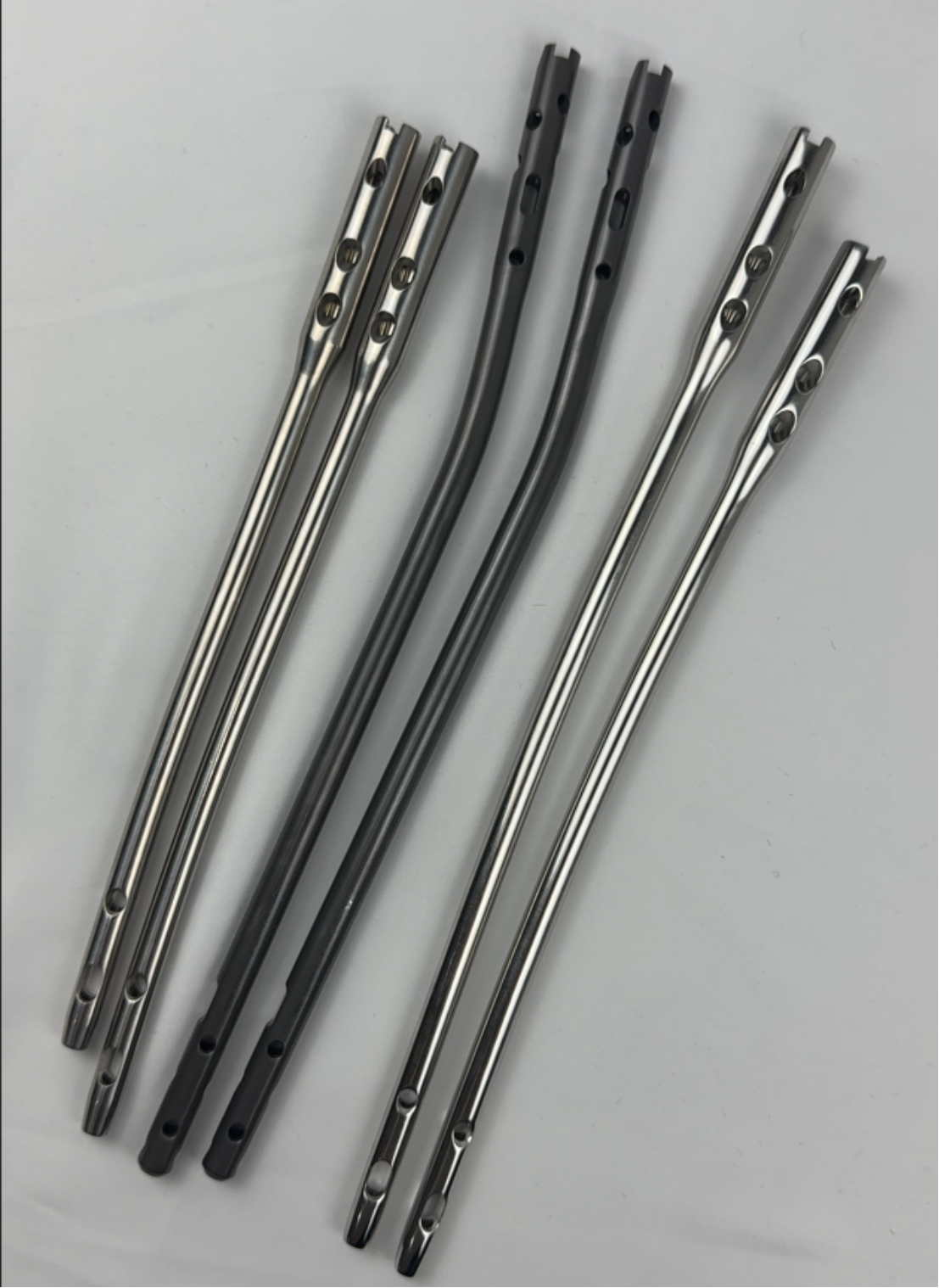
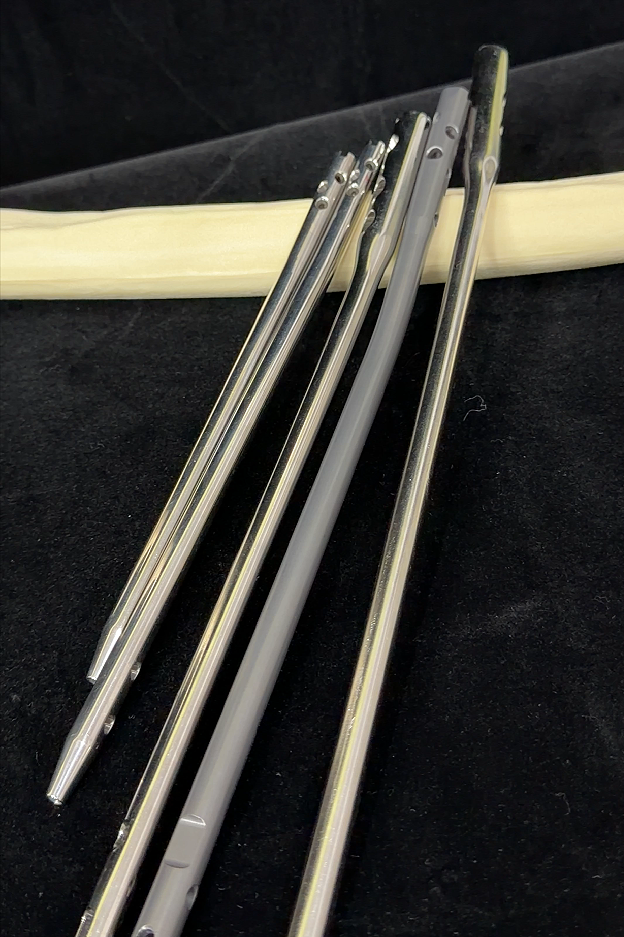
Several design features distinguish a high-quality interlocking nail :
Diameter: typically 9–13 mm for the femur, 8–11 mm for the tibia.
Material: titanium alloy (preferred for its lower stiffness and MRI compatibility) or stainless steel.
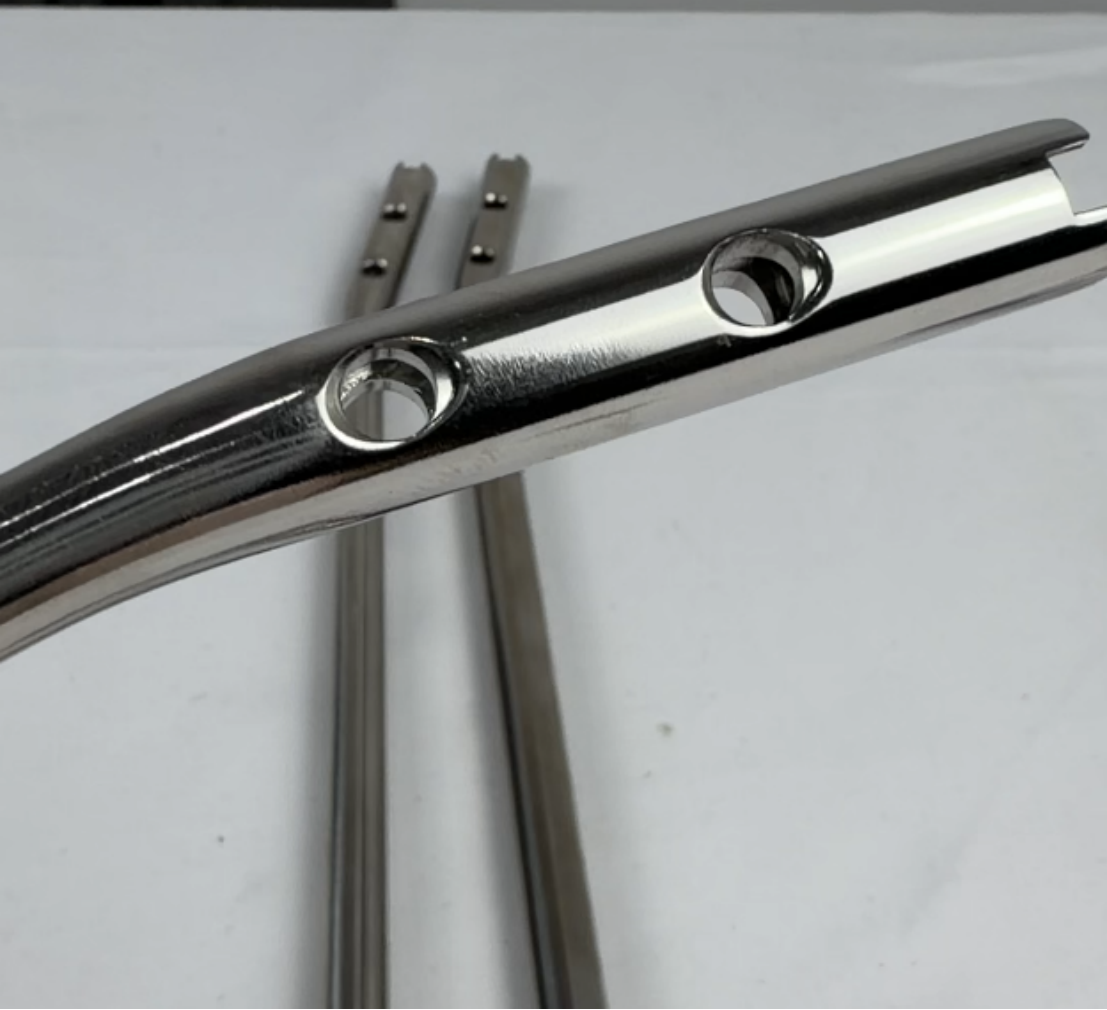
Locking hole configuration: round holes for static locking, oblong holes for dynamic options.
Proximal bend: femoral nails often have a 4–6° bend to facilitate entry at the piriformis fossa or greater trochanter.
Distal targeting: mechanical jigs or electromagnetic navigation systems.
Both the femoral interlocking nail and tibial interlocking nail incorporate these features with site-specific modifications.
Clinical Performance of the Femoral Interlocking Nail
Indications and Surgical Approach
The femoral interlocking nail is indicated for femoral shaft fractures (AO/OTA 32-A, B, C). It can also be used for select subtrochanteric and supracondylar fractures with specialized locking options. Antegrade insertion through the piriformis fossa or trochanteric entry point is standard. Retrograde femoral nailing is an alternative for distal fractures or polytrauma patients with ipsilateral acetabular or pelvic injuries.
Union Rates and Complications
A large multicenter study of 482 femoral shaft fractures treated with a femoral interlocking nail reported a union rate of 96.7% at 12 months. The mean time to radiographic union was 18.4 weeks. Malunion (primarily rotational malalignment exceeding 15°) occurred in 3.1% of patients. Nonunion requiring revision surgery was observed in 2.9%. The most common postoperative complaint was anterior knee pain, affecting approximately 23% of patients after antegrade nailing.
Reamed versus Unreamed Technique
Reamed insertion of a femoral interlocking nail increases intramedullary pressure but also provides a bone graft effect by distributing marrow contents. A meta-analysis of 1,234 patients found no significant difference in nonunion rates between reamed and unreamed groups. However, reamed nailing showed a lower implant failure rate (1.2% vs. 3.5%). The authors concluded that reamed nailing remains the preferred approach for closed femoral shaft fractures.
Distal Locking Challenges
Distal locking of the femoral interlocking nail remains technically demanding, often requiring multiple fluoroscopic images. Freehand technique exposes surgeons to significant radiation. Electromagnetic targeting systems reduce fluoroscopy time by 78% and operative time by an average of 15 minutes, according to a randomized controlled trial. These systems are increasingly adopted for both femoral and tibial applications.
Clinical Performance of the Tibial Interlocking Nail
Anatomic Considerations
The tibia has a triangular cross-section and a subcutaneous anteromedial surface, making soft tissue coverage a critical issue. The tibial interlocking nail is typically inserted via a suprapatellar or infrapatellar approach. The suprapatellar technique, performed with the knee in extension, offers easier fracture reduction and avoids a midline tendon incision.
Union and Infection Rates
A prospective registry of 638 tibial fractures treated with a tibial interlocking nail demonstrated a union rate of 91.2% after primary nailing. Delayed union (more than 6 months) occurred in 8.1%, and nonunion in 4.5%. Deep infection rates were 2.3% for closed fractures and 8.7% for open fractures (Gustilo type III). These figures underscore the importance of meticulous soft tissue management.
Compartment Syndrome and Nail Diameter
Compartment syndrome is a feared complication after tibial nailing. A retrospective analysis of 311 patients found that use of a tibial interlocking nail with a diameter greater than 10 mm was associated with a threefold increased risk of elevated intracompartmental pressures. Surgeons should consider staged management (external fixation followed by delayed nailing) when significant swelling is present.
Poller Screws for Metaphyseal Fractures
For distal or proximal tibial fractures, the standard tibial interlocking nail may lack angular stability. Poller (blocking) screws placed adjacent to the nail improve alignment by narrowing the medullary canal. A biomechanical study reported that adding two poller screws increased construct stiffness by 62% in a distal tibia fracture model.
Comparative Outcomes: Femoral versus Tibial Interlocking Nails
Time to Full Weight Bearing
Patients with a femoral interlocking nail typically begin partial weight bearing at 6–8 weeks, progressing to full weight bearing by 12 weeks. In contrast, those with a tibial interlocking nail often advance more slowly due to the tibia’s poorer blood supply and higher nonunion risk. Full weight bearing after tibial nailing averages 14–16 weeks.
Hardware Removal Rates
Routine hardware removal is more common for tibial nails because of anterior knee pain or hardware prominence. In a cohort of 1,052 patients, 27% of tibial interlocking nail recipients underwent elective implant removal, compared to only 11% for femoral interlocking nail recipients. Younger age and male gender were independent predictors of removal request.
Learning Curve
The interlocking nail procedure has a steep learning curve, particularly for distal locking. A study of surgical trainees found that the first 20 cases required an average of 12 minutes for distal locking, which decreased to 6 minutes after 50 cases. Electromagnetic navigation reduced this learning curve significantly, with novice surgeons achieving equivalent times after only 10 cases.
Technological Advances in Interlocking Nail Systems
Angle-Stable Locking Mechanisms
Traditional locking screws allow toggle within the nail hole. Newer interlocking nail designs incorporate threaded locking holes or conical sleeves that create an angle-stable construct. A cadaveric study demonstrated that angle-stable locking increased cyclic loading resistance by 40% in osteoporotic bone. This may benefit elderly patients with femoral or tibial fractures.
Biodegradable Interlocking Nails
Investigational biodegradable interlocking nail systems made from magnesium alloys or poly-L-lactic acid are undergoing clinical trials. Early results from a phase II study of 30 patients with tibial fractures showed complete osseous integration at 12 months and no need for implant removal. However, hydrogen gas formation around magnesium nails was observed in 7% of cases.
Smart Nails with Telemetry
Researchers have developed a femoral interlocking nail equipped with strain gauges and a wireless transmitter. The device measures axial loading and transmits data to an external reader. In a proof-of-concept study with 8 patients, the smart nail accurately detected non-weight-bearing compliance. Future versions may alert surgeons to impending implant failure.
Complication Management and Revision Strategies
Broken Interlocking Nail
Fatigue fracture of an interlocking nail is rare (0.5–1.2%) but challenging. Most breakages occur at a locking screw hole. Retrieval involves using a hook or trephine reamer over a guidewire. Exchange nailing with a larger diameter implant is the standard revision procedure.
Malrotation After Femoral Nailing
Rotational malalignment after femoral interlocking nail placement is underdiagnosed. CT rotational profile assessment is the gold standard. For corrections exceeding 20°, osteotomy and re-nailing with derotation is recommended. Intraoperative navigation systems reduce malrotation rates from 15% to 3%, as shown in a recent randomized trial.
Nonunion of Tibial Nailing
Hypertrophic nonunion after tibial interlocking nail treatment often responds to dynamization (removing locking screws). Atrophic nonunion requires exchange nailing with reaming and possible bone grafting. A systematic review found that exchange nailing achieved union in 78% of aseptic nonunions, rising to 89% when combined with autograft.
Conclusion
The interlocking nail remains the implant of choice for diaphyseal fractures of the femur and tibia. The femoral interlocking nail achieves high union rates with acceptable complication profiles, while the tibial interlocking nail demands greater attention to soft tissue and infection risk. Technological advances—including angle-stable locking, electromagnetic targeting, and biodegradable materials—continue to refine outcomes. Surgeons who understand the nuances of each system and the evidence supporting specific techniques can offer patients faster recovery and fewer reoperations.
