

Introduction
Femoral shaft fractures, open tibial fractures, and intertrochanteric hip fractures are among the most common injuries treated by trauma surgeons. The choice of implant directly affects healing time, complication rates, and patient recovery. The intramedullary nail provides load-sharing fixation for diaphyseal fractures. The external fixator offers temporary or definitive stability for open injuries. The proximal femoral nail is a specialized device for unstable hip fractures. This article reviews the clinical applications and technical considerations for these three essential implants.
What Is an Intramedullary Nail and How Does It Work?
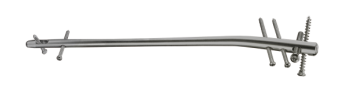
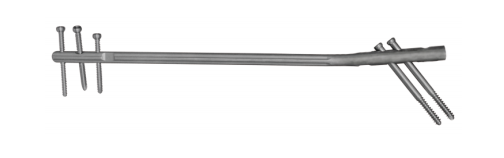
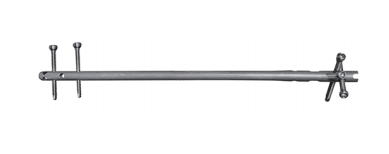
An intramedullary nail is a metal rod inserted into the medullary canal of the femur, tibia, or humerus. It acts as an internal splint, sharing axial load with the bone while allowing early weight-bearing. The nail is locked proximally and distally with screws to control rotation and shortening.
Clinical Advantages of Intramedullary Nailing
Surgeons prefer intramedullary nailing for several reasons. The procedure requires small incisions remote from the fracture site, preserving the fracture hematoma and periosteal blood supply. Reamed insertion provides a bone graft effect. Union rates for diaphyseal fractures exceed 95%, and patients can begin partial weight-bearing earlier than with plate fixation.
Common Indications
Intramedullary nails are indicated for femoral shaft fractures (AO/OTA 32-A, B, C), tibial shaft fractures, and humeral shaft fractures. They are also used for select subtrochanteric and supracondylar fractures with specialized locking options.
When Is an External Fixator the Right Choice?
An external fixator is a frame mounted outside the body, connected to bone via pins or wires. It is indispensable for damage control orthopedics, where immediate internal fixation is unsafe due to soft tissue injury or patient instability.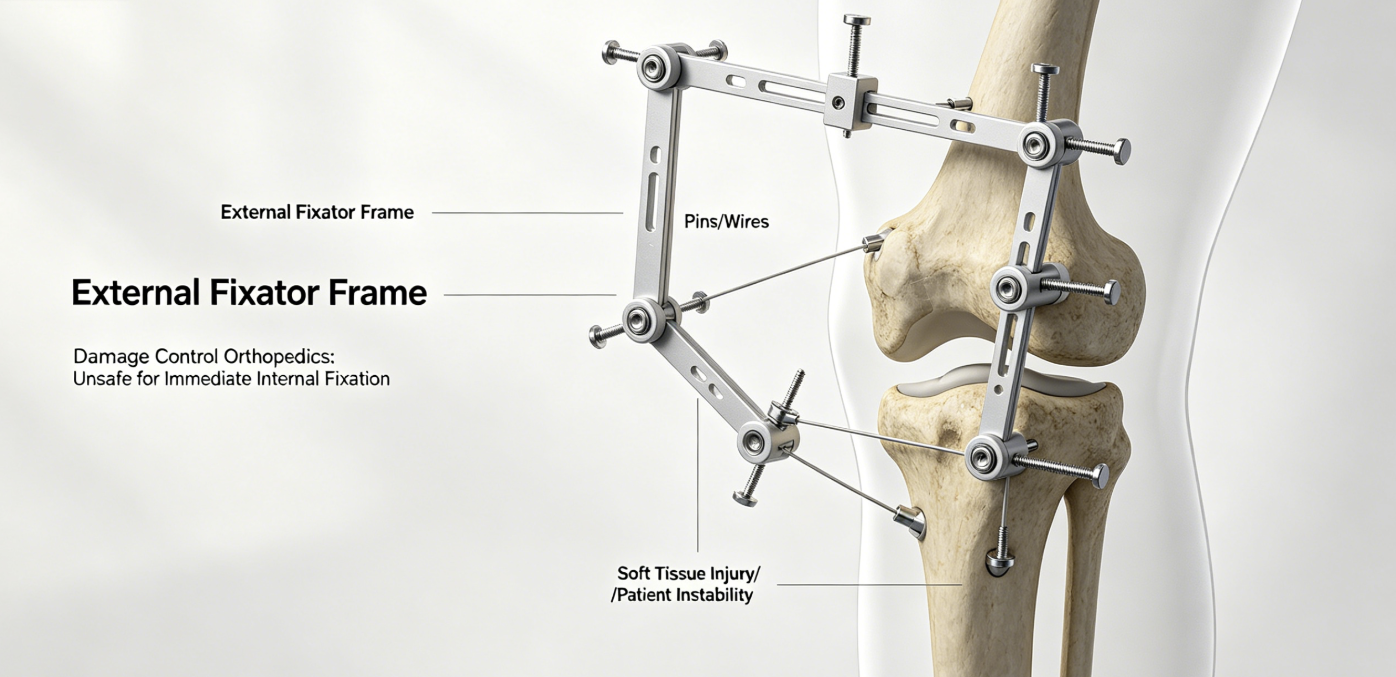
Indications for External Fixation
External fixators are preferred for Grade III open tibial fractures, pelvic ring disruptions, and pediatric fractures where growth plate preservation is critical. Unlike an intramedullary nail, an external fixator allows direct access to soft tissues for repeated debridement and wound care. In severe ankle or wrist fractures, a spanning external fixator maintains length while swelling subsides, allowing delayed definitive fixation.
Advantages and Limitations
External fixators offer rapid application, minimal blood loss, and the ability to adjust fracture alignment postoperatively. However, pin tract infection occurs in 10-30% of patients, and the frame can be cumbersome for daily activities.
What Makes the Proximal Femoral Nail Specialized for Hip Fractures?
Proximal femoral fractures—including intertrochanteric and subtrochanteric types—require implants that resist varus collapse and rotational forces. A proximal femoral nail is specifically designed for this region, featuring a lag screw or helical blade that engages the femoral head and a distal locking screw for rotational control.
DHS vs. Proximal Femoral Nail
Compared to the traditional dynamic hip screw (DHS), the proximal femoral nail offers a shorter lever arm and better load transfer, reducing implant failure in unstable fracture patterns. For elderly patients with osteoporotic bone, the proximal femoral nail provides angular stability that prevents cut-out. The nail is inserted through a smaller incision, preserving soft tissue.
Surgical Technique
The proximal femoral nail is inserted through the tip of the greater trochanter. After reaming the proximal femur, the nail is advanced. The lag screw or blade is placed into the femoral head under fluoroscopic guidance. Distal locking is performed using a freehand or electromagnetic targeting system.
Conclusion
The intramedullary nail, external fixator, and proximal femoral nail each serve distinct roles in trauma surgery. Intramedullary nails excel in diaphyseal fractures. External fixators provide temporary or definitive stability for open and complex injuries. Proximal femoral nails offer superior fixation for unstable hip fractures in osteoporotic bone. Surgeons who understand the indications and technical nuances of these implants can achieve excellent outcomes across a wide range of fracture patterns.
